Mā mua ka kite a muri: What great mentors do differently
Across our early learning centres, primary learning environments, and secondary schools, stepping into the role of a mentor teacher is both a genuine privilege and a delicate balancing act. Grounded in the spirit of tuakana-teina, effective mentoring in Aotearoa is a reciprocal relationship of ako; listening, learning, and growing flow mutually between mentor and Pia | mentee.
Building deep relational trust while navigating the daily complexities of centre or school life takes intention, care, and effective strategies. Whether you are stepping into a mentor role for the first time or looking to sharpen your established practice, this post offers research-based, practical insights to strengthen your mentoring partnership and actionable steps you can share with your Pia | mentee – starting today!
Why effective mentoring matters
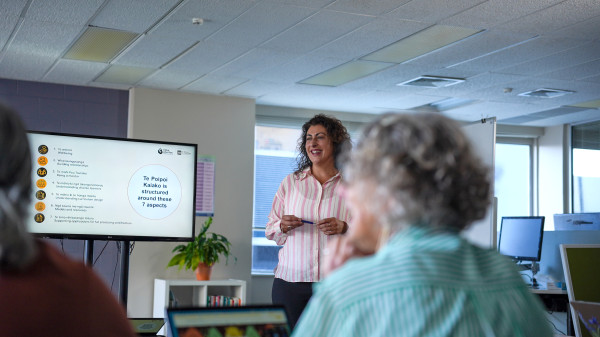
Navigating the early years of teaching in Aotearoa is an intense period of professional growth. For a Pia | mentee, the cognitive load of translating theory into practice while meeting curriculum requirements, honouring bicultural commitments under Te Tiriti o Waitangi, and the daily rhythm of a learning environment can feel overwhelming. This is precisely where effective mentoring makes the difference.
Research consistently demonstrates that strong, relational mentoring leads to:
- Increased teacher retention – early career teachers who receive structured, reciprocal support are significantly more likely to remain in the profession long-term (Ingersoll & Strong, 2011; Long et al., 2012)
- Enhanced wellbeing and self-efficacy – regular, focused dialogue reduces isolation and builds the psychological safety needed to navigate early challenges (Hobson & Ashby, 2012; Yost, 2006)
- Accelerated professional growth: Thoughtful mentoring shifts practice from reactive survival mode to intentional, student-centred inquiry (Desimone & Pak, 2017; Stanulis & Floden, 2009).
Beyond these immediate benefits, mentors can play a pivotal role in shaping a beginning teacher’s professional identity by fostering their confidence, agency, and a lifelong commitment to tikanga and reflective practice.
In Te Poipoi Kaiako, the Ministry-funded programme to support Pou Tautaoko | mentors and Pia | mentees, our purpose is to walk alongside educators across Aotearoa to nurture high-quality teaching and learning. By strengthening the capability of mentors, we ensure every learning environment and early years setting is led by confident, supported, and inspired teachers.
Tuakana-teina in action: Five practices for high-impact mentoring
Impactful mentoring shifts away from fixing problems and towards cultivating agency and capability. The following strengths-based practices offer a roadmap for supporting your Pia | mentee while keeping ako and relational trust at the center.
1. Build relational trust
Relational trust is the foundation of any successful tuakana-teina relationship. When your Pia | mentee feels psychologically safe, they are far more willing to take pedagogical risks, open their practice to observation, and speak honestly about their challenges. Honouring their identity, background, and unique strengths creates a space where growth can thrive without fear of judgment.
In practice: Start your catch-ups by asking, "What has been a moment of joy or a win for you this week, no matter how small?"
2. Clarify roles and expectations
Clear boundaries prevent confusion and build confidence for both the Pou Tautoko | mentor and the Pia | mentee. Mentoring encompasses holistic support and professional guidance, whereas coaching often focuses on developing specific, targeted skills. Explicitly defining these roles ensures you know when to step in with direct guidance and when to hold space for coaching.
In practice: Revisit your expectations together by asking, "When you feel stuck, do you prefer me to offer direct suggestions first, or help you brainstorm your own solutions?"
3. Use reflective questioning
Providing immediate answers might feel efficient, but guiding your Pia | mentee to analyse their own practice builds long-term autonomy and critical thinking. Reflective questioning shifts the provisionally certified teacher from passively receiving advice to active inquiry. This practice strengthens their ability to self-assess and adapt in real time.
In practice: Instead of telling your mentee how to regain focus during a noisy moment, ask, "What patterns did you notice in the room just before the group lost focus, and what could you try differently next time to keep them engaged?"
4. Co-design provisional teacher (PT) sessions
For induction and mentoring to be meaningful, learning must feel relevant to the Pia | mentee’s daily reality rather than focusing on compliance requirements. Co-designing PT sessions honours their agency, aligning professional growth goals with their current teaching context and Te Whāriki or the New Zealand Curriculum requirements.
In practice: Frame session planning around their inquiry by asking, "Looking at your goal for this term, what specific piece of evidence or practice should we explore in our next session?"
5. Seek and use feedback
Modelling a growth mindset is one of the most powerful tools a mentor possesses. By explicitly inviting feedback on your own mentoring practice, you disrupt traditional power dynamics and demonstrate that professional learning is a lifelong journey for every educator. By inviting feedback, you are modelling openness, vulnerability, and genuine reflective practice.
In practice: At the end of a session, check in by asking, "What aspect of our kōrero today was most helpful for you, and is there anything I could do differently next time to support you better?"
Habits to avoid
Even with the best of intentions, it is easy to slip into mentoring habits that unintentionally limit a Pia | mentee's growth. Recognising these situations allows Pou Tautoko | Mentors to reflect on their own practice, ensuring your support remains empowering, relational, and aligned with ako.
1. Avoiding tricky conversations
While avoiding challenging feedback might feel like protecting a relationship, shying away from constructive discussions can mean a Pia | mentee does not address some important areas of practice. True relational trust provides the safety net needed to have honest, compassionate, and transparent conversations about practice.
- Frame feedback around shared goals and impact on ākonga or tamariki, using clear evidence rather than subjective opinion to guide the conversation.
2. Assuming your mentee | Pia learns the way you did
While anecdotes about a Pou Tautoko | mentor’s own early career experiences can offer valuable insights, assuming a Pia | mentee needs to learn or manage learning environments the same way their Pou Tautoko | mentor did can stifle their individual teaching identity.
- Honour Pia | mentees’ individual identities, backgrounds, and learning preferences. Co-construct learning pathways that leverage their unique talents rather than replicating your own journey.
Further support
Strengthening your mentoring practice is ongoing, relational work that evolves alongside the needs of your Pia | mentee and your own growth as a leader. To support you on this journey, the Teaching Council of Aotearoa New Zealand provides comprehensive Guidelines for creating an induction and mentoring programme, offering a clear framework for high-quality practice across our sector.
To help you bring these guidelines to life, our Ministry-funded Te Poipoi Kaiako | Mentor Support Programme offers practical workshops and resources designed specifically for both new and experienced mentors. Te Poipoi Kaiako offers:
- Practical guidance – structured frameworks to keep your catch-ups focused, efficient, and student-centred.
- Reflective coaching tools – targeted prompts to develop critical inquiry skills without adding to your cognitive load.
- Professional growth pathways – actionable strategies to help you co-design induction goals and gather meaningful evidence together.
Whether you choose to explore these tools alongside your Pia | mentee or use them independently to refine your practice, we are here to support your journey.
Explore our free resources and learn more about Te Poipoi Kaiako – Mentor Support Programme today.
Closing thoughts: The impact you make
Guiding an emerging educator is among the most meaningful investments you can make in our education system. The intentionality, empathy, and structure you bring to your ako partnership fundamentally alter how Pia | mentees navigate the steep learning curve of their first years.
By nurturing an environment that is safe for curiosity, inviting honest evaluation, and walking beside them through both successes and setbacks, you do much more than ease their daily workload; you help ignite the professional agency, resilience, and reflective disposition that will sustain them throughout their career.
Ultimately, the quality of your partnership echoes far beyond your scheduled PT kōrero, directly enriching the learning environments of the tamariki or ākonga they serve every day.
As you prepare for your next conversation with your Pia | mentee, pause to consider:
How might you create space this week for your Pia | mentee to lead the narrative of their own learning?
References
Desimone, L. M., & Pak, K. (2017). Instructional coaching as high-quality professional development. Theory Into Practice, 56(1), pp. 3–12. https://doi.org/10.1080/00405841.2016.1241947
Hobson, A. J., & Ashby, P. (2012). Reality shock and how to survive it: Key findings from the FDTL project on the mentoring of beginner teachers. International Journal of Mentoring and Coaching in Education, 1(2), pp. 142–158. https://doi.org/10.1108/20476471211246949
Ingersoll, R. M., & Strong, M. (2011). The impact of induction and mentoring programs for beginning teachers: A critical review of the research. Review of Educational Research, 81(2), pp. 201–233. https://doi.org/10.3102/0034654311403323
Long, J. S., McKenzie-Robblee, S., Schaefer, L., Steeves, P., Wnuk, S., Pinnegar, E., & Clandinin, D. J. (2012). Beginning teachers’ stories of retending: Intentions to remain in the teaching profession. Teachers and Teaching, 18(6), pp. 629–642. https://doi.org/10.1080/13540602.2012.746500
Stanulis, R. N., & Floden, R. E. (2009). Intensive mentoring as a way to help beginning teachers enact student-centered pedagogy. Teaching and Teacher Education, 25(1), pp. 112–122. https://doi.org/10.1016/j.tate.2008.07.011
Yost, D. S. (2006). Reflection and self-efficacy: Enhancing the retention of qualified teachers from a teacher education perspective. Teacher Education Quarterly, 33(4), pp. 59–76.
Share this blog with your peers